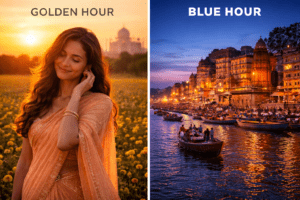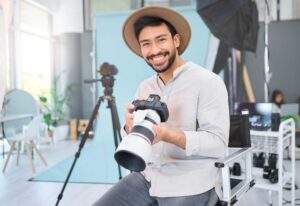

Photography of family functions and birthday parties is a vivid experience. If you are a new photographer, you can face many challenges during these shoots.
You will face challenges like constantly moving people, especially kids, indoor lights can be dim, and apart from that, each moment is unpredictable. That’s why event photography requires technical knowledge, an understanding of the event and its emotions, and creative thinking.
You must be thinking about how to photograph functions like a professional. This blog will help you to learn each aspect in an emotional, technical and creative way.
Understand the Event and Emotion Behind It
You need to plan your shooting before you start even photography. The first part is to understand the event well; in this way, you will have an idea about the overall flow. This plan works for birthday parties, family functions and other events.
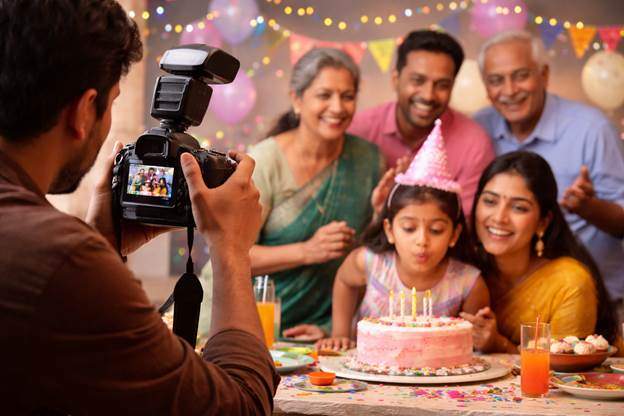
If you have an idea about the event, capturing each candid becomes easier.
Note these factors during photography planning:
- Time of cake cutting
- Any performance or religious events
- Important people are coming to the event
If you have a good idea about these factors, then you will not miss any important moment.
Pick the Right Camera and Configuration
You are dealing with people talking and moving around in a low-light indoor room. Nobody is posing for a perfect photo. In this kind of situation, your skill and camera settings save you.
Good configurations for an indoor party:
- Keep your aperture between f/1.8 and f/3.5
- You have to adjust your white balance according to indoor lighting.
- Keep your shutter speed fast, for example, 1/125 or more than that.
- ISO should be 800 to 3200, adjust according to the indoor lighting.
You can shoot in a wide aperture if you have a lens kit. Thus, you can avoid the challenge of low light in indoor shooting.
Plan the Shooting To Apply Proper Lighting
Lighting errors can make a hit click completely flop. So be careful about the lighting conditions. If you are shooting indoor use LED lights if needed.
- Make sure your subject is near soft natural light.
- You can also use an external flash to balance the natural light.
- Avoid direct sunlight and overhead lights, as it creates unnecessary shadows.
- Using external light is necessary as your camera flash can flatten the images.
Follow these instructions to improve your photo.
Click and Capture Candid Shots
Your skills in capturing candid shots will convey the lively atmosphere of the event. Therefore, you need to take candid shots other than posed photographs. It helps to add emotion and liveliness to the event you are covering.
Capture:
- Family members meeting after a long time with genuine smiles.
- Children running and playing
- Emotional moments
This way, you will make the event memories feel alive and authentic to the clients.
Understand the Correct Composition Techniques
You can set the configuration based on the event and photography needs. For example, applying the rule of thirds, try with various angles, and you must avoid a cluttered background when taking a particular shot.
Try to place your subject where you think you can take the best photo. For instance, besides decorations, doors or windows. New hands on expedience in event photography will make you aware of what tricks and techniques you should add. So keep experimenting with the event shooting opportunities and also learn from other professionals.
Select Your Lens Based on Needs
You have to think about the photograph you are planning to select the right lens. For example, go with a 50 mm lens if you’re taking a portrait in a low-light environment. Pick the wide-angle lens for a room shot or group photo.
Other than that, a 24 to 70 mm zoom lens works in many situations where you need to take both wide and close-up shots.
If you are feeling confused and overwhelmed as a starter, then go with a fixed setting, a 50 mm f/1.8 lens. As this is a good condition that works in more or less every situation.
Editing is an Important Part
You can create magic with an average photograph if you know good editing. Your skills in the post-processing work make an image feel alive.
Think about what type of contrast goes with the shot you have captured and input for better results. Further adjust white balance and avoid over-editing images, or else the natural appeal will be gone. Make crops to adjust the image frame that feels most suitable.
If you are a new photographer and don’t have good knowledge of editing, you may use applications like Adobe Lightroom.
Boost Your Skills Through Practice
Good event photography skills take time; you cannot learn them in one or two days. You will master the right techniques of lighting, frame adjustment and candid shots over time.
Although you can boost your skills faster by going for a professional photography course. If you want experience from a professional event photographer, you may enrol in short-term photography classes in Kolkata.
Go for this structured course for better knowledge in real-world event photography.
Avoid Common Mistakes
- Slow your shutter speed
- Too much camera flash use
- Background objects in focus
- Missing key event moments
- Always using the same angle of shooting
Keep all these factors in mind to avoid them when you are involved in event photo shooting. Keep working on different kinds of events to boost your knowledge. You may also try getting professional knowledge from a short-term photography course.