Buying your first lens can feel a little scary.
You walk into a shop or open an online store and suddenly you’re surrounded by numbers, letters, prices, and brand names. Everything looks impressive. Everything looks expensive. And in the back of your mind, one thought keeps coming up — What if I buy the wrong one?
Let’s take a breath.
Choosing your first lens does not have to be confusing or costly. In fact, most beginners make better progress by keeping things simple. You don’t need fifteen options. You need one good decision.
Whether you’re learning on your own or taking photography courses, the way you choose your first lens can make a big difference in how quickly you grow.
Start With What You Actually Like Photographing
Forget technical words for a moment.
Think about what naturally pulls your attention.
Do you enjoy taking photos of people?
Do you love sunsets and open roads?
Do food photos excite you?
Do you find yourself zooming in on small details?
Your interests should guide your lens choice — not trends, not YouTubers, and definitely not salespeople.
Someone who enjoys portraits will not need the same lens as someone who loves mountains or street scenes. And trying to buy a lens “for everything” almost always leads to disappointment.
If you’re ever unsure, remember this: most good photography courses help students understand their shooting style first and gear second. That’s because equipment only makes sense when it supports what you love.
Focal Length — Explained Without the Confusion
When you see numbers like 18mm, 35mm, 50mm, or 200mm, that’s the focal length. It tells your camera how much of the scene to include.
Here’s a simple way to understand it:
Wider lenses let you fit more into the picture.
Standard lenses feel more natural.
Long lenses bring far things closer.
That’s really it.
Wide lenses are great for travel, rooms, and landscapes.
Standard lenses work well for everyday photos.
Telephoto lenses shine when your subject is far away.
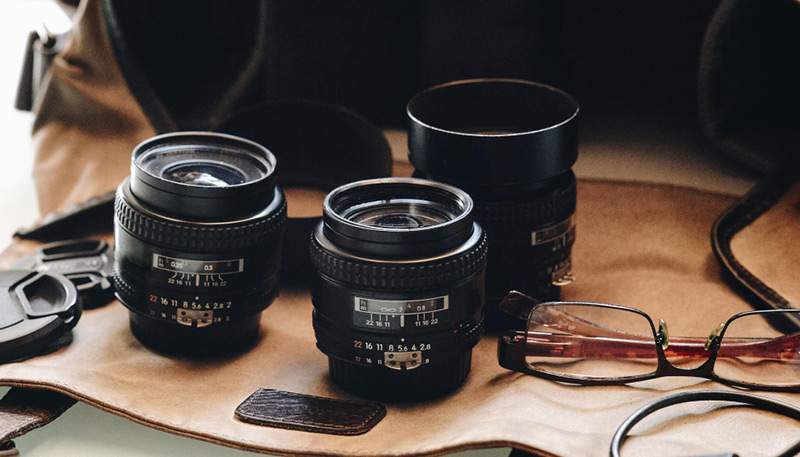
If you’re only buying one lens to start with, a 50mm is a solid place to begin. It’s simple, affordable, and teaches you framing the right way. Many photographers still use it years into their careers.
Zoom or Prime: Which Should You Choose?
Zoom lenses let you twist the lens and change your view.
Prime lenses stay fixed at one focal length.
Zoom gives comfort.
Prime gives discipline.
When you use a prime lens, you move your body instead of twisting glass. You think more. You frame better. You understand distance naturally.
That’s why many photography courses quietly push beginners toward prime lenses early on — not because they’re fancy, but because they build skill faster.
Aperture: The Difference Between Sharp and Soft
Aperture controls how much light enters your lens and how blurry your background looks.
Smaller number = wider opening.
A wide aperture helps you:
• Shoot indoors
• Separate subject from background
• Create softer portraits
• Work in low light
If you love portraits or dim lighting, look for a lens that opens wide. It’s one of those upgrades you feel immediately.
Ignore the Brand Race
Here’s something nobody tells beginners:
Expensive gear does not teach photography.
Practice does.
A skilled shooter with a basic lens will always beat a beginner with the world’s best camera.
Instead of chasing brand names, look for comfort, sharpness, and reliability. The right lens feels good in your hands and fits your kind of photography.
That matters more than logos.
A Quick Word About Crop Sensors
If you’re using an entry-level camera, chances are you’re on a crop sensor.
This means your lens may feel slightly “zoomed in” compared to full-frame cameras.
A 50mm will feel tighter.
A wide lens won’t feel ultra-wide.
This isn’t a problem.
It’s just something to be aware of.
Photography courses usually explain this early so students understand why framing feels different between cameras.
Try Before You Commit
If you can rent a lens, do it.
A weekend with a lens will teach you more than reading reviews for a month. You’ll know if it feels right. You’ll know if you enjoy it.
That experience is worth more than any spec sheet.
Conclusion
Your first lens doesn’t have to be perfect.
It just has to get you started.
As you shoot, your taste will change. Your interests will shift. What you love today might bore you tomorrow — and that’s part of becoming a photographer.
If you want clear guidance, honest feedback, and hands-on experience, photography courses in Kolkata make learning faster and mistakes cheaper.
But whether you’re in a classroom or on your own…
Pick a lens.
Shoot often.
Learn slowly.
That’s how real photography begins.