

Understanding light is one of the first difficulties faced by novice photographers. An picture can be made or broken by light. It has an impact on overall visual quality, colors, sharpness, and mood. But if you’re just getting started, you might be wondering if you should utilize artificial or natural light. Which is more suitable for novices?
Each kind of light has its own advantages, disadvantages, and creative potential. Understanding how these two light sources operate will help you make better decisions and advance as a photographer more quickly, whether you’re practicing at home or intend to take photography courses in Kolkata.
Understanding Natural Light
The sun is the source of natural light. At some times of the day, it’s really soft, accessible, and free.
Types of Natural Light
- Golden Hour Light
the hour prior to sunset and the hour following sunrise.
Soft, cozy, and attractive—ideal for landscapes and portraiture.
- Midday Light
rough, bright, and powerful.
Excellent for photographs with a lot of contrast, but difficult for novice portraits.
- Window Light
A window lets in diffused sunshine.
Perfect for still life, food, and indoor portraiture.
Advantages of Natural Light
Easy to Use
Natural light is easy for beginners because it doesn’t require additional equipment like diffusers or lights..
Soft & Flattering
Natural light creates soft highlights and silky shadows, particularly during golden hour or on overcast days.
Perfect for Portraits
Skin tones appear vivid and real..
Free & Abundant
You don’t have to buy lights at first..
Limitations of Natural Light
Not Always Available
Your illumination selections may be limited by interior locations, seasonal variations, and weather fluctuations.
Difficult at Noon
Harsh shadows beneath the eyes and chin can be produced by midday light.
Less Control
Sunlight cannot be increased or decreased. The only options are to move your topic or hold off till the lighting improves.
Understanding Artificial Light
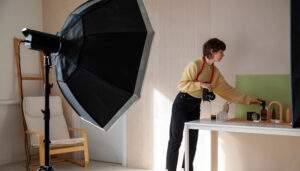
Any artificial light source, including LED panels, flashguns, and softboxes, is referred to as artificial light.
Types of Artificial Light
- Speedlights (External Flash)
Small, portable, and great for beginners. - LED Lights
Continuous light — you can see the effect instantly. - Softboxes & Umbrellas
Used with flashes or LEDs to spread light evenly. - Ring Lights
Good for beauty shots and product photography.
Advantages of Artificial Light
Full Control
You control the light’s brightness, intensity, and direction..
Available Anytime
You don’t need sunlight to shoot day or night.
Repeatable Results
Artificial light is a favorite among professional photographers due to its consistency.
Creative Possibilities
Even in cramped areas, you may produce striking, studio-style photographs.
Limitations of Artificial Light
Requires Investment
Modifiers, lights, stands, and batteries are all expensive.
Learning Curve
Adjusting brightness, angles, and color temperature can be daunting for novices.
Can Look Harsh
Strong shadows can be produced by artificial light in the absence of diffusers.
This is why enrolling in photography courses in Kolkata is beneficial; students receive practical instruction using equipment, which makes the learning curve simpler and more enjoyable.
Natural Light vs Artificial Light: Which One Should Beginners Use?
Now that you have a better understanding of each, let’s compare them in practical settings.
For Indoor Photography
Natural Light:
Excellent for flat lays, food photographs, and window-light portraiture.
For gentle results, simply position your person close to a window that faces north.
Artificial Light:
Better at night or in a dimly lit setting.
Excellent for controlled sessions and product photography.
For beginners:
Start with the window light. When you’re comfy, switch to LED panels.
For Outdoor Photography
Natural Light:
When it comes to taking outdoor photos and landscapes, golden hour is the best.
Artificial Light:
Useful for artistic nighttime photography or fill light in intense sunlight.
For beginners:
Great for fill light in strong sunshine or artistic evening photos.
For Portraits
Natural Light:
Gentle, attractive, and manageable.
Artificial Light:
Expert, reliable, and ideal for indoor configurations.
For beginners:
Let’s start with natural light. Later on, learn about studio lighting.
For Product Photography
Natural Light:
Beautiful but unpredictable.
Artificial Light:
Allows perfect control for commercial-quality shots.
For beginners:
Experiment with window light and reflective surfaces.
How to Choose Based on Your Photography Goals
If you love portraits → Start with natural light
Learn to manipulate placement and shadows.
If you want to freelance → Learn both
Clients expect consistency.
If you want to do product or commercial photography → Start exploring artificial light early
It gives precise results.
If you are planning to join photography courses in Kolkata → You’ll learn both in-depth
You will practice with outdoor natural light, flashes, diffusers, and studio setups.
Tips for Mastering Natural Light
- For subtle effects, shoot at golden hour.
- Steer clear of direct sunshine from above.
- To bounce light, use reflectors.
- For dreamy pictures, practice backlit portraiture.
- Examine shadows and how they evolve during the day.
Tips for Mastering Artificial Light
- Before adding more lights, start with only one.
- To lessen harsh shadows, use an umbrella or softbox.
- Try using bounce flash.
- Find out how light softness is affected by distance.
- For precise colors, adjust the white balance.
Conclusion
So, should novices utilize artificial light or natural light?
The response is straightforward:
Since natural light is inexpensive, simple, and forgiving, start with it.
Then, as you develop, study artificial lighting, particularly if you’re looking for expert outcomes.You will become a well-rounded photographer if you comprehend both. Enrolling in photography courses in Kolkata offers you practical mentorship, actual studio practice, and advice from experts who work with both light sources on a daily basis if you’re serious about improving.